

Key Takeaways

Static org charts are obsolete; modern org design tools focus on dynamic roles and workflows to manage constant change.
Role clarity is a key performance driver, with clear roles boosting work performance by up to 25%.
Effective organizational design is the foundation for integrating AI agents as productive members of hybrid human-AI teams.
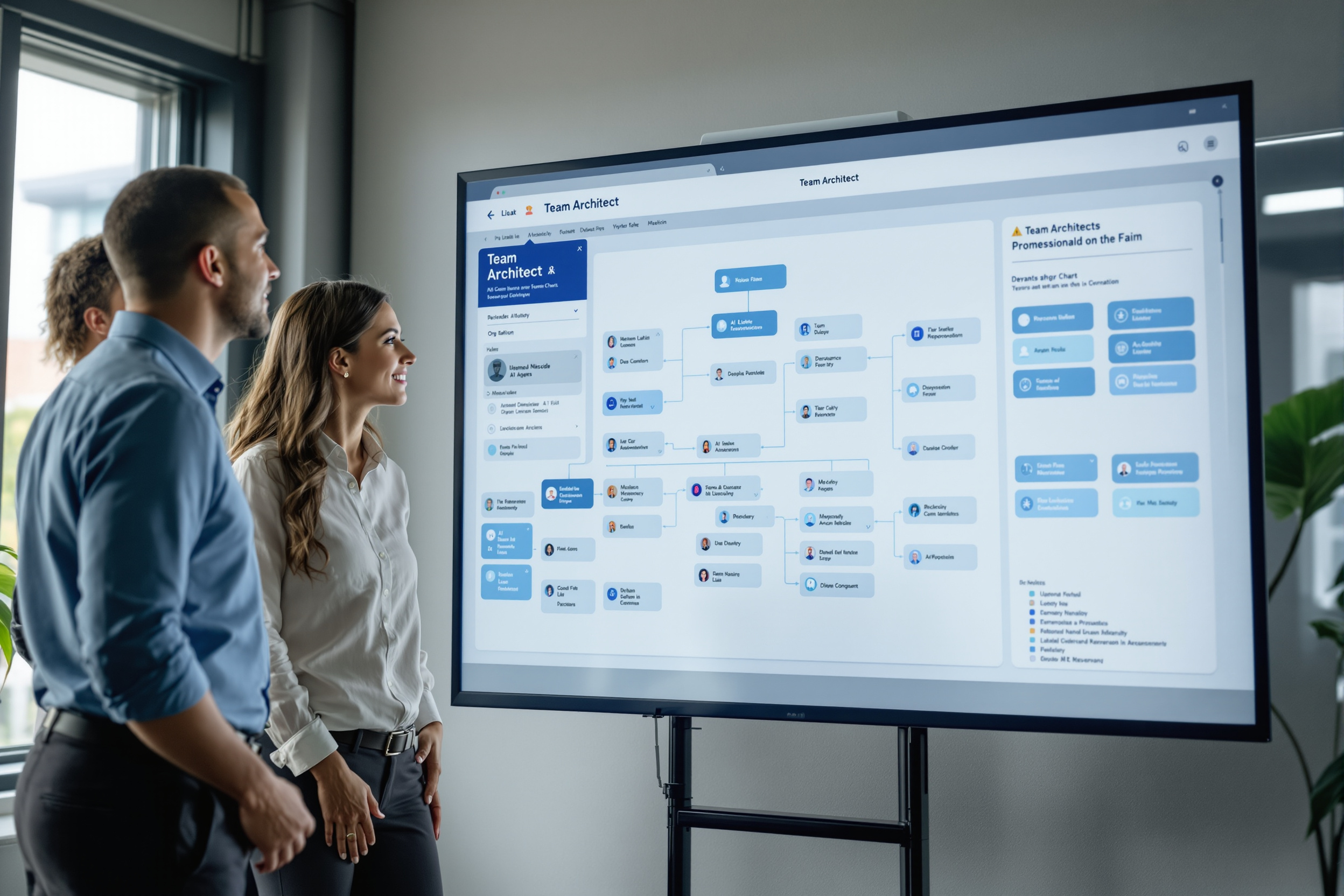
Traditional organizational charts are artifacts from a bygone era of predictability. Today, Team Architects face constant change, talent shortages, and the challenge of integrating AI teammates. Static, top-down structures fail to capture the reality of modern work, leading to role confusion and a costly gap between strategy and execution. The solution lies not in redrawing the chart, but in adopting dynamic team architecture with modern org design tools. These platforms provide the clarity and flexibility needed to build resilient, high-performing teams ready for any transformation.
Snack Facts: The High Cost of Outdated Structures
The case for new org design tools is clear and urgent. In Germany, only 14% of the workforce is actively engaged, a symptom of systemic structural issues. Globally, 61% of executives admit their firms struggle to bridge the gap between strategy and day-to-day implementation. This is compounded by the fact that nearly 50% of all employees currently lack clarity in their roles, a foundational element for performance. These figures paint a picture of widespread inefficiency directly tied to outdated organizational models.
Traditional Tools Fail in the Face of Constant Change
Static org charts and spreadsheets were not built for the modern pace of business. In Germany, excessive bureaucracy and inefficient processes result in up to €146 billion in lost economic potential annually. This friction is felt inside companies, where over five out of ten org design practitioners report that understanding how people collaborate across units is a major challenge. This lack of visibility leads to the strategy-execution gap, where on average only 56% of strategic initiatives are successful. When your map of the organization doesn't reflect the territory of how work actually gets done, you create confusion, not alignment. This is the core problem with legacy org design tools.
This gap between the formal structure and the informal networks where work happens is where value is lost. It explains why a record 45% of employees in Germany are actively seeking or open to new jobs. People leave confusing, frustrating environments. To master constant change, Team Architects need a living model of their organization, not a static snapshot. This requires a fundamental shift in tooling and mindset.
Adopt a Dynamic, Role-Based Approach to Design
The most effective response to constant change is building an agile organization. Companies with agile structures increase their adaptability by up to 30% compared to their peers. This agility comes from shifting the focus from rigid job titles to dynamic roles and responsibilities. It's about clarifying "who does what, why, and with whom" in a way that can be updated in real-time. This approach directly tackles the ambiguity that holds teams back. Research shows that providing employees with role clarity can increase overall work performance by 25%.
Modern org design tools are built for this reality. They allow you to visualize not just reporting lines, but workflows, project-based circles, and skill distributions. Instead of a top-down decree, the organizational design becomes a shared, transparent resource that everyone understands. This clarity is the foundation for operationalizing strategy and making your teams resilient. You can try teamdecoder for free to see this dynamic approach in action. This shift from static charts to dynamic platforms is the key to navigating complexity.
Architect Insight: A Framework for Modern Team Architecture
For Team Architects, a structured approach is essential for success. Here is a practical framework for implementing a modern organizational design:
- Define Your Purpose Tree: Start with why. Map your company's core purpose down to the purpose of each circle and individual role. This ensures every activity is aligned with strategic goals, a crucial step since 61% of firms struggle with implementation.
- Map Roles, Not People: Abstract the work from the individuals. Define the key roles your organization needs to succeed, detailing their accountabilities and metrics. This role-based work model makes it easier to handle growth, downsizing, or re-orgs.
- Visualize Workflows and Dependencies: Go beyond reporting lines to show how value is created. Document key processes and illustrate how different roles collaborate to achieve outcomes. This directly addresses the challenge where over 50% of practitioners can't see these patterns.
- Plan for Human-AI Collaboration: Proactively design for hybrid teams where AI agents are teammates. Identify tasks suitable for AI and define the new responsibilities for human roles that will collaborate with them. This prepares your structure for the agentic age.
This structured process turns abstract goals into an operational reality that every team member can see and understand.
Operationalize Your Design with the Right Toolkit
A framework is only as good as the tools used to implement it. teamdecoder is designed specifically for Team Architects who need to build and adapt organizations at speed. Use the AI Role Assistant to draft clear role descriptions in minutes, tackling the ambiguity that affects nearly 50% of employees. Our platform helps you visualize workloads and FTE allocations, preventing the burnout that drives the 45% of German workers looking for new jobs.
With features like Circles and the Purpose Tree, you can build a living, transparent model of your organization. This isn't just about drawing charts; it's about creating a single source of truth that connects every person and role to the company's strategy. This clarity is what boosts performance and makes your organization truly adaptable. The right org design tools make continuous transformation manageable.
Integrate AI as a Teammate, Not Just a Tool
The next frontier of organizational design is the hybrid team, where humans and AI agents work side-by-side. Success here isn't about technology; it's about structure. You cannot layer AI onto chaotic human processes. Clear roles and responsibilities create the necessary landing strip for AI agents to be effective teammates. One Harvard study found that teams utilizing AI were almost 10% more likely to produce a top-tier solution.
This requires a new way of thinking about team structures. The goal is to identify routine, data-intensive tasks within human roles and delegate them to AI agents. This frees up human talent for more strategic work, such as complex problem-solving and decision-making. Effective org design tools allow you to model these new distributed workflows, ensuring a seamless integration of AI into your team. This proactive approach to workforce transformation is what will define the leading companies of the next decade.
Getting Started: Your 5 Steps to Becoming a Team Architect
Transforming your organization from a static hierarchy to a dynamic, role-based system is an achievable process. Here are five initial steps to begin your journey:
- Map Your Current Team Structure: Use a modern tool to visualize not just who reports to whom, but who is accountable for what.
- Identify Role Overlaps and Gaps: Use this newfound clarity to spot redundancies and uncover critical responsibilities that no one owns.
- Create Your Free teamdecoder Account: Start building a dynamic model of your team and move away from outdated spreadsheets.
- Run Your First Campfire Session: Use our guided process to discuss structural challenges with your team and co-create solutions.
- Draft a New Role with the AI Role Assistant: Experience how quickly you can create clarity and define accountability for a new initiative.
Begin building a more resilient and transparent organization today.
---
Try teamdecoder for free - shape your team and make change feel like play!
#TeamArchitecture #OrgDesign #HybridTeam
More Links
Federal Ministry of Labour and Social Affairs (BMAS) provides information concerning the reorganization of the Federal Ministry of Labour and Social Affairs in Germany.
Federal Statistical Office (Destatis) discusses the changing labor market in Germany.
acatech (German National Academy of Science and Engineering) offers a publication on work in the digital transformation.
Fraunhofer IAO (Institute for Industrial Engineering) describes its research areas in organizational development and work design.
TATuP (Journal for Technology Assessment in Theory and Practice) features an article that likely discusses technology assessment and related topics.
KPMG presents its insights on 'New Work' within the public sector, focusing on people and change management.
Deloitte shares its perspective on flexible organizational models.
FAQ
What are org design tools?
Org design tools are software platforms that help leaders and consultants map, analyze, and manage a company's organizational structure. Modern tools go beyond simple org charts to visualize roles, responsibilities, workflows, and skills, enabling a more dynamic and strategic approach to organizational development.
How do org design tools help with AI integration?
They help by first clarifying human roles and processes, creating a stable foundation to build on. You can then model how AI agents will take over specific tasks, define new human-AI workflows, and manage the transition to a hybrid team structure where everyone knows who is responsible for what.
Can these tools be used for more than just restructuring?
Yes. Modern org design tools are for continuous organizational development, not just one-off restructuring. They are used for onboarding new team members, managing workloads, operationalizing new strategies, and running continuous improvement processes like teamdecoder's Campfire.
What is the difference between an org chart and organizational design?
An org chart is a simple diagram of the formal reporting hierarchy. Organizational design is the comprehensive process of structuring all components of a business-roles, processes, governance, and metrics-to align with its strategic goals. The org chart is just one small, often outdated, artifact of organizational design.